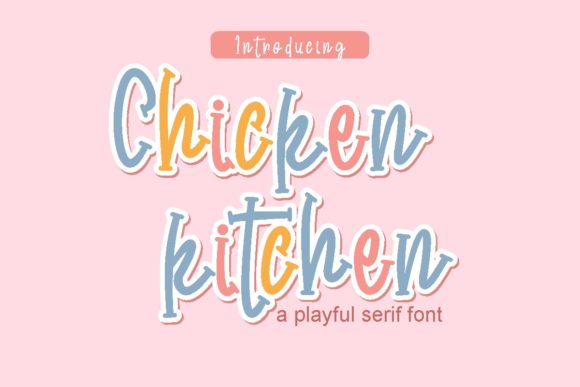
Chicken Kitchen: A Practical Guide to Integrating a Sassy Serif into Your Creative Workflow
In the world of digital design and content creation, typography is rarely just about readability. It is a functional tool that dictates tone, establishes hierarchy, and guides the user's emotional response before they even read the first sentence. For professionals ranging from small business owners to freelance marketers, selecting the right typeface is often the difference between a project that feels generic and one that resonates with its intended audience. This is where Chicken Kitchen enters the conversation. While it may appear on the surface as a playful, Halloween-themed font, its utility extends far beyond seasonal decorations. It serves as a strategic asset for creators who need to inject personality, sass, and approachability into their visual communications.
Understanding how to integrate a specific font like Chicken Kitchen into a broader workflow requires moving past the idea of it being merely a "fun" addition. Instead, view it as a deliberate design decision that impacts brand voice, user engagement, and project consistency. Whether you are launching a back-to-school campaign, designing a limited-edition product line, or simply trying to break the monotony of corporate sans-serif templates, this serif font offers a unique texture that can elevate your output. The key lies in knowing when to deploy it, how to pair it with other assets, and how to maintain quality control throughout the implementation process.
Defining the Role of Chicken Kitchen in Modern Design
Chicken Kitchen is characterized by its friendly, slightly irregular serif structure. Unlike rigid geometric fonts that convey cold efficiency, this typeface mimics the organic imperfections of hand-lettering while maintaining the structural integrity of a traditional serif. This duality makes it exceptionally versatile. It sits comfortably in the space between professional documentation and whimsical storytelling. For entrepreneurs and educators, this means you can communicate complex ideas without sounding intimidating, or present marketing copy without sounding overly salesy.
The font's primary strength is its ability to add a "sassy touch." In a digital landscape saturated with uniformity, sappiness acts as a differentiator. When used correctly, it signals that the creator behind the content has a distinct personality. This is particularly valuable for personal brands, bloggers, and freelancers who rely on their individual voice to stand out. However, using such a distinctive font requires a clear strategy. It should not be applied randomly; rather, it must fit into a cohesive visual system where every element supports the overall message.
Strategic Placement in Project Lifecycles
Effective implementation begins before any design work starts. Consider the lifecycle of your project: planning, execution, and review. During the planning phase, ask yourself if the tone of the project aligns with the personality of Chicken Kitchen. If you are working on a serious financial report, this font would likely undermine credibility. Conversely, if you are designing a craft tutorial, a children's activity guide, or a quirky social media campaign, it becomes a powerful tool.
Once the decision is made to use the font, integration happens during the execution phase. This involves setting up your design environment to ensure compatibility and consistency. For instance, if you are working in a collaborative team environment, you must ensure that all members have access to the correct file versions and understand the usage guidelines. A common pitfall in workflow management is inconsistent application, where one designer uses the font for headings and another uses it for body text, leading to a disjointed final product. Establishing a style guide early on prevents this fragmentation.
During the creative process, Chicken Kitchen can serve as a focal point. Use it to anchor your layouts. Because of its strong character, it naturally draws the eye. You might place it prominently in headers, pull quotes, or call-to-action buttons. The goal is to let the font do some of the heavy lifting in conveying emotion, allowing other elements like imagery and color to support that narrative. This reduces the cognitive load on the viewer, making the information easier to digest and more enjoyable to consume.
Integration with Tools and Resources
No designer works in isolation, and the choice of typography interacts heavily with the tools and platforms you use. Chicken Kitchen, like many display fonts, requires careful consideration regarding technical compatibility. Before committing to a long-term workflow, verify that the font renders correctly across your target devices and browsers. Web-safe implementation is crucial; if the font fails to load on a mobile device, the entire design intent is lost. Ensure that you are utilizing web font services or embedding techniques that preserve the font's integrity without compromising page load speeds.
Furthermore, consider how this font interacts with other design assets. Pairing Chicken Kitchen with a clean, minimalist sans-serif can create a balanced contrast. The playfulness of the serif can be grounded by the neutrality of a standard font, creating a hierarchy that guides the reader through the content. This technique is highly effective in editorial design and blog layouts. By mixing typefaces, you create visual rhythm, preventing the design from becoming visually monotonous.
For educators and content creators, the integration process also involves accessibility. While Chicken Kitchen is charming, legibility remains paramount. Avoid using it for large blocks of text. Instead, reserve it for titles, captions, and short phrases. This ensures that the font enhances the reading experience rather than hindering it. When working with screen readers or assistive technologies, ensure that the underlying HTML structure remains semantic, regardless of the visual styling applied via CSS.
Practical Implementation Tips for Professionals
To maximize the effectiveness of Chicken Kitchen in your daily workflow, adopt a methodical approach to its usage. Start by defining specific use cases within your organization or personal brand. Are you using it for holiday promotions? Back-to-school newsletters? Or perhaps for branding a new line of creative products? Having a clear purpose prevents the font from feeling like a gimmick and transforms it into a strategic brand element.
- Preparation: Create a dedicated folder for your typography assets. Organize files by weight, style, and language support. This simple step saves time during the execution phase and ensures you are always using the most up-to-date version of the font.
- Consistency: Develop a set of rules for sizing and spacing. Since Chicken Kitchen has a unique x-height and stroke variation, standard kerning pairs might not apply. Test your letter-spacing manually to ensure the text looks balanced at different sizes.
- Quality Control: Implement a review stage specifically for typography. Check for alignment issues, especially when the font is rotated or placed on curved paths. Ensure that the "sassy" feel does not devolve into illegibility.
Another critical factor is scalability. A font that looks great on a poster might become unreadable on a small icon or a mobile notification. Always test your designs across various mediums. If you are building a responsive website, check how Chicken Kitchen behaves on narrow screens. You may need to implement fallback fonts for smaller viewports to maintain usability without sacrificing the aesthetic entirely.
Long-Term Value and Adaptability
While Chicken Kitchen is often associated with seasonal themes, its potential for long-term use should not be overlooked. Many designers make the mistake of treating fonts as disposable resources, changing them with every trend cycle. However, a well-integrated typeface can become a signature element of your brand identity. By consistently using Chicken Kitchen in specific contexts, you build recognition. Over time, audiences will associate the font's personality with your brand values—creativity, friendliness, and a touch of rebellion.
This adaptability extends to cross-platform campaigns. Imagine a scenario where you launch a series of email newsletters, social media graphics, and physical flyers. Using Chicken Kitchen as a unifying thread ties these disparate assets together, creating a cohesive narrative. The font acts as a visual glue, ensuring that your audience recognizes your content immediately, even in a crowded feed. This consistency builds trust and reinforces your message.
Moreover, the font's versatility allows it to evolve with your projects. As your business grows or your audience changes, you can adjust the weight and scale of Chicken Kitchen to suit new needs. A bold version might work for a major announcement, while a lighter variant could be perfect for subtle background accents. This flexibility ensures that the font remains relevant and useful throughout the lifespan of your initiatives.
Optimizing for Outcomes
Ultimately, the success of integrating Chicken Kitchen into your workflow depends on the outcomes you aim to achieve. Are you looking to increase engagement? Do you want to humanize your brand? Or are you simply trying to make a boring task more enjoyable? By aligning the font's characteristics with these goals, you ensure that every design decision is intentional. Remember that typography is a form of communication. When you choose Chicken Kitchen, you are choosing to speak in a voice that is confident, approachable, and undeniably human.
As you move forward with your projects, keep the principles of preparation, compatibility, and consistency in mind. Treat the font not as an afterthought, but as a core component of your design strategy. With careful planning and thoughtful execution, Chicken Kitchen can transform ordinary designs into memorable experiences. Whether you are crafting a Halloween invitation or a professional presentation, the right typeface can make all the difference. Embrace the sassy nature of Chicken Kitchen, but always ground it in a solid workflow that prioritizes clarity and impact.